Forestry Mulching
A focused way to address brush and woody growth while planning around access, boundaries, and the property’s next use.
Forestry MulchingHome › Services › Tree Thinning
Open selected portions of wooded property without treating every tree and every acre as the same decision.
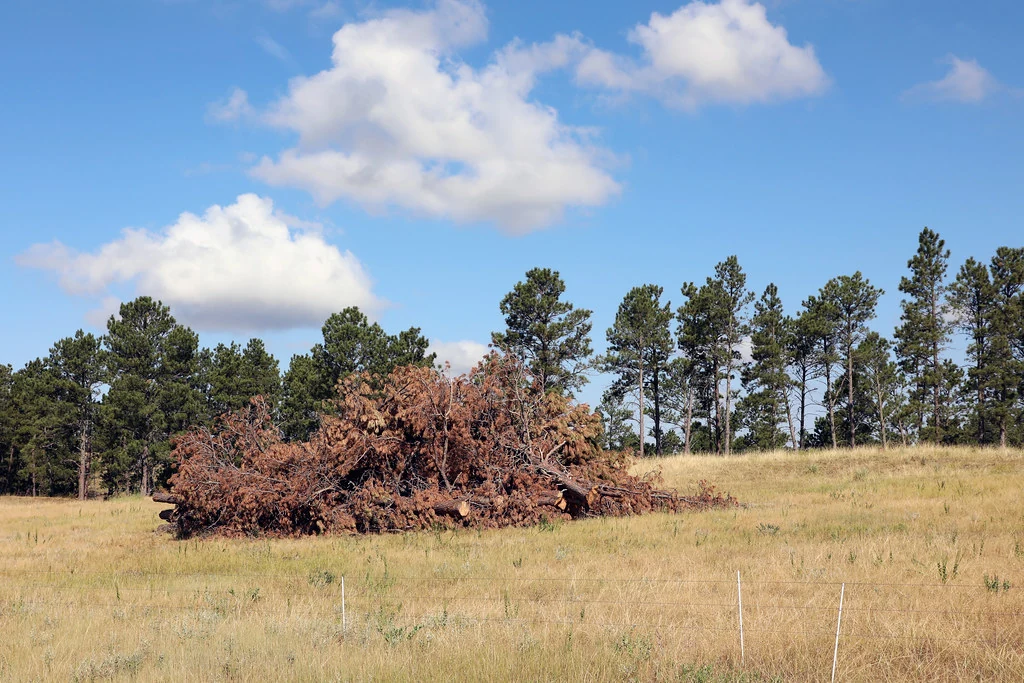
Tree thinning is different from a request to clear an entire lot. The owner’s main task is to explain which qualities matter in the finished area: easier movement, a more open view through selected woods, a connection between existing usable spaces, or fewer trees in a defined section. Those goals provide direction without assuming that every tree should be removed. Flowers Forestry Mulching lists tree thinning as a current service, and the same property may also involve forestry mulching or view clearing. Keeping those intents distinct makes the estimate easier to understand.
A useful starting point is to walk the area from the place where it will be seen or used. An owner can note trees that are clearly intended to remain, screening that serves a purpose, and the direction in which more openness is desired. This is not a substitute for specialized tree assessment, and the verified business information does not claim arborist credentials. The site should not imply otherwise. Tree condition questions that require a credentialed opinion should be treated separately from the clearing and thinning scope described here.
Mountain properties can look very different depending on where a person stands. A thinning request framed only by acreage may miss the actual purpose. If the owner wants visibility from a home, porch, driveway, path, or potential homesite, that viewing point should be named. If the goal is movement through the property, the beginning and end of the route are more useful than a general request for spacing. A few photographs looking into the work area from those locations can help organize the initial estimate conversation.
The same principle applies to commercial property. Rather than treating every wooded edge as one project, the request can identify the portions tied to access, sightlines, a right of way, or another verified clearing need. This does not promise that any particular amount of thinning will create a specific view or permanent condition. Vegetation, neighboring land, and the owner’s later maintenance decisions remain separate considerations. The immediate goal is to define which area Flowers Forestry Mulching should review and what kind of openness the customer is trying to achieve.
Thinning plans are often shaped as much by retained trees as by removed growth. Screening between properties, shade near an occupied area, a wooded boundary, or a group of trees the owner values may all influence the requested pattern. Clearly identifying retain areas helps avoid the assumption that open is always better. It also allows fence-line clearing or view clearing to be considered in a narrow band while the rest of the property stays outside the immediate project.
Owners should also distinguish preferences from confirmed boundaries. Ribbon, stakes, or a map can communicate intent, but legal property lines and easements should not be improvised. If a desired thinning area approaches neighboring land or a shared feature, the ownership question needs to be clear before work. The same caution applies around structures and owner-known site features. Sharing those constraints during the estimate stage lets the discussion stay focused on the actual service rather than relying on assumptions. Flowers Forestry Mulching can then price the request according to area size and the services being considered.
Some projects become clearer when the owner compares service intents. Forestry mulching may fit a brush-heavy area where the main goal is opening ground-level access. Lot clearing may fit a defined area connected to a homesite or another next use. Right-of-way clearing focuses on a corridor. Fence-line and view clearing focus on a narrow edge or selected sightline. Tree thinning belongs where retained trees are central to the request. These descriptions do not prescribe a method from a distance; they help the owner explain the problem in terms Flowers Forestry Mulching can review.
Free estimates are available. Because pricing depends on the area size and requested services, a combined project should identify each zone rather than merging the whole parcel into one vague description. An owner might describe an access corridor, a thinning area, and a view-clearing band as three connected needs. The business serves Franklin, western North Carolina, northern Georgia, and northwestern South Carolina, including the launch communities shown on the town pages. Customers elsewhere in the currently listed wider service area can ask whether their property falls within the area served.
Tree thinning centers on a defined area where selected trees remain. Lot clearing is framed around opening a portion of land for a next use, such as a homesite decision.
Yes. Identify the viewing point and direction, while understanding that the service is clearing and thinning rather than a promise of a specific or permanent view.
Flowers Forestry Mulching provides free estimates. Pricing depends on the area size and the services included in the request.
Share the location, approximate area, access, photos, and the result you want to consider.
Request a Free Estimate