Forestry Mulching
A focused way to address brush and woody growth while planning around access, boundaries, and the property’s next use.
Forestry MulchingHome › Services › Right-of-Way Clearing
Focus clearing work on the corridor that connects a property, fence, work area, or destination.
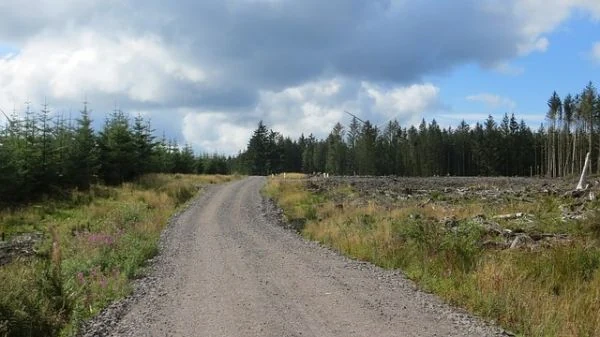
Right-of-way clearing is easiest to discuss when the corridor has a clear purpose and clear limits. It may connect an entrance to interior acreage, follow an existing route that has become overgrown, provide access along a property feature, or serve a commercial property need. The current verified service list includes right-of-way clearing, but it does not establish road construction, grading, utility work, or legal-right determination. The public page should keep that distinction visible. Flowers Forestry Mulching can review vegetation-clearing needs within a corridor without implying that every access-related service is included.
The owner can prepare by identifying where the corridor begins, where it should end, and why it matters. If an older route is visible, photographs taken in both directions can help. If the route is only proposed, a marked map can explain the idea while leaving final site questions open. Width should be discussed as an intended use rather than assumed from the label right of way. A walking route, property-access corridor, fence connection, and other uses can call for different conversations, so the customer should describe the purpose plainly.
The term right of way can describe both a physical corridor and a legal interest. Those are not interchangeable. Property owners are responsible for understanding where they have authority to request work, particularly near neighboring parcels, shared drives, recorded easements, or utility corridors. Flowers Forestry Mulching is not presented as a legal or surveying service, and the website should not suggest that a clearing estimate settles ownership or access rights. If the corridor limits are uncertain, the uncertainty should be resolved with the appropriate records or professionals before clearing is authorized.
Once the request is within confirmed property or authorized limits, marking important edges makes the scope easier to review. The owner should point out fences, gates, occupied areas, structures, selected trees, and any route connection that must remain usable. These observations do not invent a universal checklist for every property. They are practical details that prevent a broad corridor description from hiding the features that matter. The estimate can then focus on area size and the actual combination of services being requested.
A corridor usually matters because of what lies beyond it. The destination may be wooded acreage the owner wants to inspect, a future homesite area, a fence line, a view point, or another portion of a residential or commercial parcel. Naming that destination helps determine whether the request ends with right-of-way clearing or should also include a separate review of forestry mulching, lot clearing, tree thinning, or fence-line and view clearing. It also prevents the access portion from being treated as the entire project when it is only the first piece.
For mountain property, the route between two points can be more important than their straight-line distance. Customers should describe turns, changes in grade, narrow entries, and other visible conditions without trying to diagnose the correct equipment or promise feasibility. The verified information does not name equipment models or access limits, so those claims do not belong on the page. The public guidance can still be useful: show the route, explain the goal, identify constraints, and ask Flowers Forestry Mulching to review the clearing portion through a free estimate.
A right-of-way request often arrives as a length, but length alone does not tell the whole story. The intended width, existing vegetation, connection points, and any linked clearing areas all shape the size of the work being considered. Flowers Forestry Mulching’s verified pricing statement remains the same across services: estimates are free, and pricing depends on the area size and services requested. The website therefore gives no price per foot, per acre, per day, or by equipment type. Any such number would be unsupported.
When contacting the business, include the property location, the corridor’s approximate beginning and end, current access, and photographs if available. State whether the request concerns a residential or commercial property and whether another listed service is part of the same goal. Flowers Forestry Mulching is based in Franklin, North Carolina, and serves western North Carolina, northern Georgia, and northwestern South Carolina. The launch town pages highlight eight communities, while the current site lists a broader group within its service-area description. A customer near those areas can ask directly whether the property is within range.
No such legal service is claimed. Owners should confirm their authority, boundaries, and easement questions separately before authorizing clearing in a corridor.
No. The verified service is right-of-way clearing. Road construction, grading, and other unlisted work should not be assumed to be included.
Yes. Flowers Forestry Mulching provides free estimates, with pricing based on area size and the services requested.
Share the location, approximate area, access, photos, and the result you want to consider.
Request a Free Estimate